
Gum sore when flossing
Gum soreness during flossing often reflects inflammation or technique, but persistent bleeding or pain needs an examination.
The short answer
Gum soreness during flossing often reflects inflammation or technique, but persistent bleeding or pain needs an examination. Plaque at the gum margin can make gingiva tender, while snapping floss into the tissue can cause a local injury.
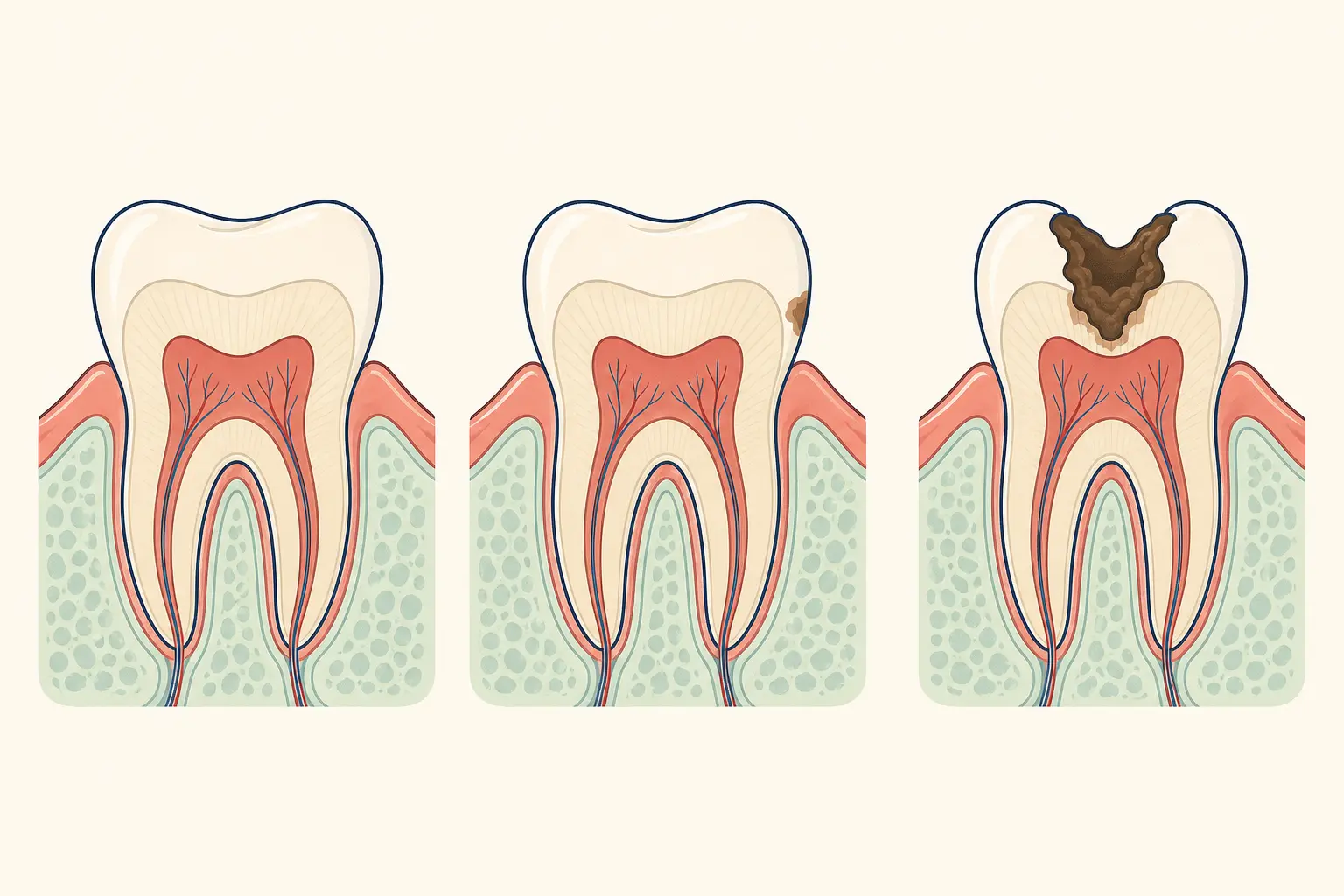
What is the direct answer?
What does this question mean?
Healthy gingiva fits closely around teeth; inflamed gingiva may look red, swollen, or bleed when plaque is disturbed. A sore point can also relate to trapped food, a filling edge, periodontal disease, or an ulcer.
What can you do next?
Use clean floss or an interdental brush gently, guiding it against each tooth in a C shape and sliding below the gum edge without forcing it. Continue careful brushing and arrange a professional cleaning if deposits remain.
When should you seek dental care?
Book an examination if soreness lasts, recurs in one location, or comes with swelling, pus, bad taste, loose teeth, or gum recession. Facial swelling, fever, or difficulty swallowing requires urgent care.
What should you ask the dentist?
Ask whether the soreness comes from plaque, calculus, a restoration, or periodontal pocketing, and whether your flossing technique is suitable. Ask which interdental size reaches each contact without injuring the papilla.
Frequently asked questions
Should I stop flossing if it bleeds?
Do not abandon gentle plaque removal, but arrange an assessment if bleeding persists or the area is painful.
Can floss cut the gum?
Forceful or snapping movements can injure gingiva; controlled contact against the tooth reduces that risk.